Marwari Wedding Traditions: Complete Guide to Rituals, Customs, Dresses & Ceremonies (2026)
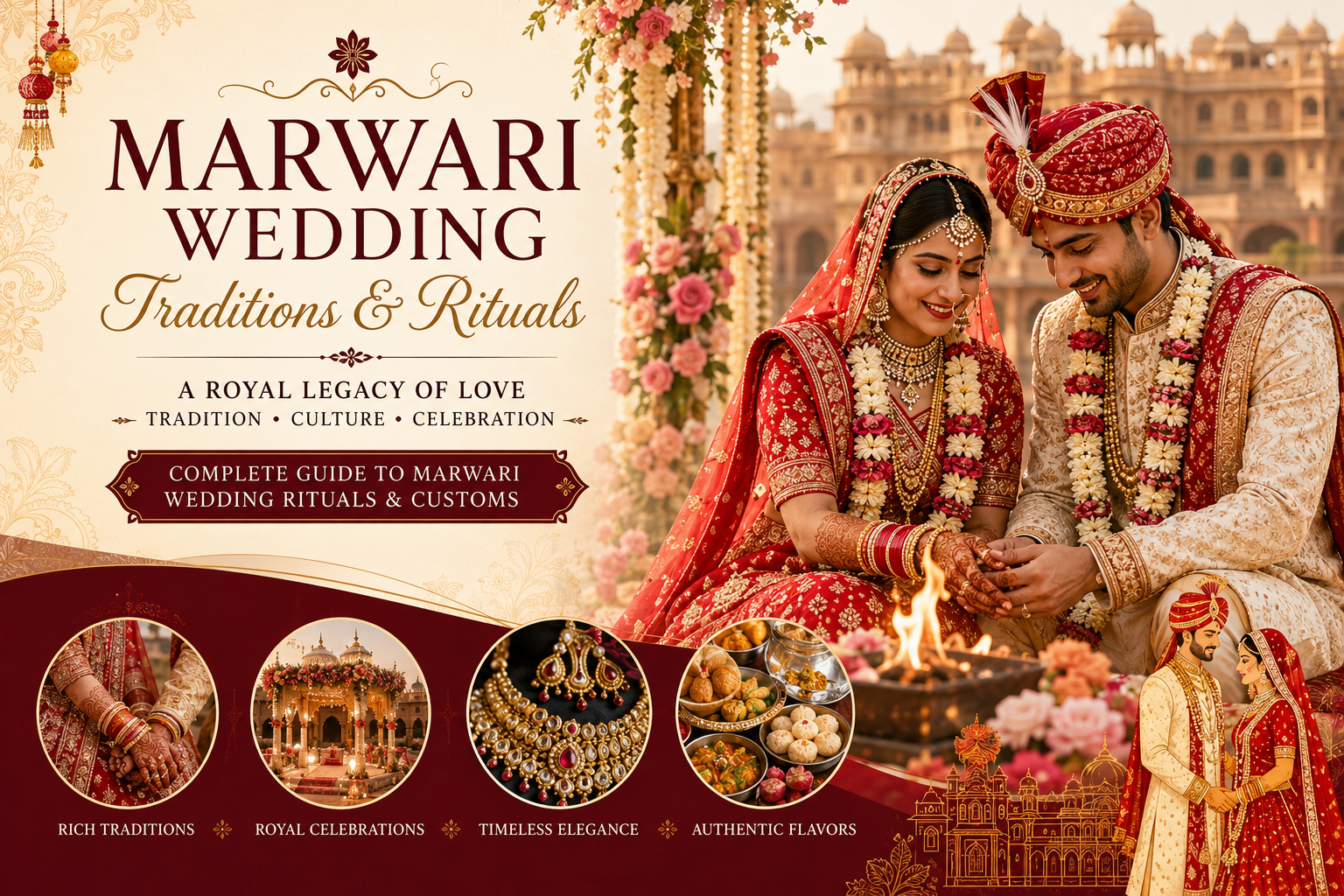
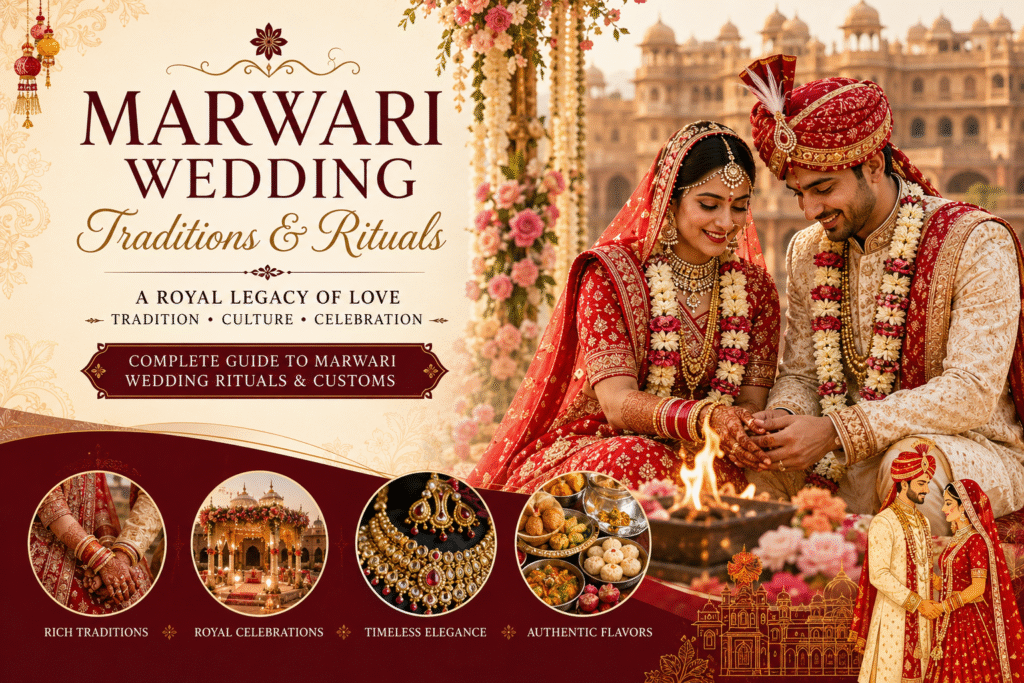
Marwari weddings are among the grandest and most culturally rich celebrations in India. Rooted in the royal traditions of Rajasthan, these weddings beautifully combine ancient Vedic rituals, vibrant celebrations, luxurious décor, traditional attire, soulful music, and delicious cuisine. Every ceremony has a deep cultural significance while also bringing together families in a joyful celebration.
Whether you are planning your own Marwari wedding or attending one for the first time, understanding these traditions helps you appreciate the beauty behind every ritual. From the engagement ceremony to the emotional Vidaai and Pag Phera, each custom reflects love, respect, family values, and lifelong commitment.
Today, many couples also blend traditional Marwari customs with modern wedding experiences, including elegant décor themes, destination weddings, cinematic photography, and personalized entertainment. Professional services like Best Wedding Planners In Delhi, Best Wedding Decorators In Delhi, pre wedding photoshoot in delhi, Candid Wedding Photography Gurgaon, and Destination Wedding Planner In Jaipur make it easier to organize a memorable celebration while preserving traditional values.
What Makes a Marwari Wedding Special?
Marwari weddings are known for their royal elegance, colorful ceremonies, and family-oriented traditions. Every ritual is performed with devotion and is designed to bless the couple with prosperity, happiness, and a successful married life.
Highlights of a Marwari Wedding
- Rich Rajasthani traditions
- Multiple pre-wedding ceremonies
- Lavish decorations
- Grand baraat celebrations
- Traditional folk music and dance
- Authentic Rajasthani cuisine
- Family-centered rituals
- Luxurious bridal and groom attire
The celebrations usually continue for several days, making every function unique and memorable.
Traditional Marwari Wedding Dresses, Jewellery & Food
Bridal Attire
A Marwari bride traditionally wears an embroidered silk or velvet lehenga in shades of red, maroon, pink, or orange. Heavy zari work, gota patti embroidery, mirror work, and intricate handwork enhance the bridal outfit.
Bridal Jewellery
A complete Marwari bridal look includes:
Borla
Traditional Rajasthani forehead ornament.
Rakhdi
Royal head accessory.
Timaniyaan
Traditional choker necklace.
Aad Necklace
Long necklace paired with the choker.
Nath
Large bridal nose ring.
Chooda
Traditional bridal bangles.
Bajuband
Armlet worn on the upper arm.
Bichiya
Toe rings symbolizing marriage.
Payal
Anklets completing the bridal look.
Groom’s Attire
The groom generally wears:
- Royal Sherwani or Achkan
- Dhoti or Churidar Pajama
- Traditional Safa or Pagdi
- Kamarbandh
- Mojari Shoes
- Brooch
- Kalgi
- Pearl Mala
- Sword (Talwar)
Traditional Marwari Wedding Food
Food is one of the biggest attractions of every Marwari wedding.
Popular dishes include:
- Dal Baati Churma
- Gatte Ki Sabzi
- Ker Sangri
- Rajasthani Kadhi
- Methi Bajra Poori
- Bajre Ki Khichdi
- Laal Maas (optional)
- Ghevar
- Malpua
- Mawa Kachori
- Rabri
- Jalebi
- Moong Dal Halwa
A well-curated food menu often becomes one of the most memorable aspects of the celebration.
Complete Marwari Wedding Rituals
Roka Ceremony
The wedding journey begins with Roka, where both families officially approve the marriage. Gifts, sweets, blessings, and tilak are exchanged.
Byah Haath
Women from the family gather to sing traditional Mangal Geet while preparing Mangodi and sweets, blessing the bride or groom for a prosperous future.
Naandi Ganesh Pooja
Lord Ganesha is worshipped before all wedding ceremonies to remove obstacles and bless the couple.
Bhaat Nyotana
The bride or groom’s mother formally invites her maternal family to participate in the wedding.
Bhaat Bharna
The maternal uncle accepts the invitation and promises his support for the wedding ceremonies.
Myra Ceremony
The maternal family arrives with gifts, clothes, jewelry, sweets, and blessings for the couple.
Mehndi Ceremony
Beautiful henna designs are applied to the bride’s hands and feet. In many Marwari families, the groom also applies Mehndi.
Mudda Tikka (Sagai)
The engagement ceremony marks the official beginning of the wedding celebrations with ring exchange and family blessings.
Mehfil or Sangeet
Family members perform dance performances, music, games, and entertainment during this lively celebration.
Telbaan
A mixture of turmeric, curd, and mustard oil is applied before the Haldi ceremony to purify and bless the bride and groom.
Pitthi Dastoor
The traditional Haldi ceremony enhances the natural glow of the bride and groom while symbolizing purity and happiness.
Nikasi
Before leaving with the Baraat, the groom receives blessings from his family. His sister ties the Sehra while his mother performs an auspicious ritual.
Baraat
The groom arrives at the wedding venue on a beautifully decorated horse accompanied by dancing relatives, music, and celebrations.
Toran Ceremony
Before entering the venue, the groom touches the Toran using a neem stick to remove negativity and invite prosperity.
Jaimala
The bride and groom exchange floral garlands, marking their acceptance of one another.
Kanyadaan
The bride’s parents formally entrust their daughter to the groom, making it one of the most emotional rituals.
Saptapadi (Seven Pheras)
The couple takes seven sacred vows around the holy fire, promising lifelong companionship, trust, respect, and commitment.
Sindoor Daan
The groom applies Sindoor to the bride’s forehead, symbolizing their married life.
Mangalsutra Ceremony
Many modern Marwari weddings also include tying the Mangalsutra as a symbol of marital commitment.
Ashirwad Ceremony
Elders bless the newly married couple with prosperity, happiness, and a successful future.
Vidaai
The bride bids farewell to her parents and begins a new chapter of life.
Griha Pravesh
The bride is welcomed into her new home with traditional rituals performed by the groom’s family.
Pag Phera
The couple visits the bride’s parental home after the wedding, where they receive blessings and gifts.
Modern Trends in Marwari Weddings
Today’s Marwari weddings beautifully combine tradition with luxury.
Popular wedding trends include:
Royal Palace Weddings
Many families choose heritage palaces and forts for a regal celebration.
Destination Weddings
Planning a royal wedding in Rajasthan has become increasingly popular, making Destination Wedding Planner In Jaipur services highly preferred.
Customized Wedding Decor
Luxury floral installations, crystal mandaps, pastel themes, and royal décor concepts are transforming wedding venues. Experienced Best Wedding Decorators In Delhi help create customized wedding experiences.
Professional Wedding Planning
Managing multiple ceremonies requires careful coordination. Hiring Best Wedding Planners In Delhi ensures every ritual, guest, vendor, and function runs smoothly.
Cinematic Photography
Modern couples preserve every emotion through cinematic films and creative photography. Services like Candid Wedding Photography Gurgaon beautifully capture natural moments, while a professionally planned pre wedding photoshoot in delhi creates timeless memories before the wedding.
Tips for Planning a Perfect Marwari Wedding
Start Planning Early
Large weddings require several months of preparation.
Prepare a Detailed Guest List
Finalize invitations well in advance.
Book Vendors Early
Popular decorators, photographers, makeup artists, and planners are often booked months ahead.
Respect Family Traditions
Discuss important rituals with elders before planning the schedule.
Create a Wedding Timeline
Maintain proper timing for all ceremonies to avoid confusion.
Arrange Guest Hospitality
Accommodation, transportation, welcome hampers, and hospitality leave a lasting impression on guests.
Focus on Photography
Every ceremony has emotional moments worth preserving through professional photography and videography.
Why Professional Wedding Planning Matters
A Marwari wedding includes numerous ceremonies, family traditions, vendors, and logistics. Professional wedding planners simplify the entire process by coordinating décor, hospitality, entertainment, venue management, catering, photography, transportation, and scheduling.
With experienced planning, families can focus on celebrating rather than managing last-minute arrangements.
Conclusion
Marwari weddings are a beautiful blend of culture, devotion, family values, and royal celebrations. Every ritual—from Roka and Mehndi to Seven Pheras, Vidaai, and Pag Phera—symbolizes love, respect, and lifelong companionship. While modern couples continue to embrace luxury experiences such as destination weddings, elegant décor, cinematic photography, and personalized celebrations, the essence of a Marwari wedding remains deeply rooted in tradition. A thoughtfully planned celebration ensures every custom is honored while creating unforgettable memories for the couple and their families.
Frequently Asked Questions
1. How many days does a Marwari wedding usually last?
Most Marwari weddings last between 3 and 7 days, depending on family traditions and the number of ceremonies.
2. What is the most important ritual in a Marwari wedding?
The Seven Pheras (Saptapadi) are considered the most sacred and significant ritual.
3. Why is the Baraat so grand in Marwari weddings?
The Baraat celebrates the groom’s arrival and symbolizes joy, prosperity, and the beginning of a new journey.
4. What colors are commonly worn by a Marwari bride?
Red, maroon, pink, orange, and deep royal shades are the most traditional choices.
5. Is Mehndi important in Marwari weddings?
Yes. Mehndi represents happiness, prosperity, love, and good fortune for the couple.
6. Can Marwari weddings be organized as destination weddings?
Yes. Many couples choose royal heritage venues in Rajasthan for destination weddings while preserving all traditional rituals.
7. What is the purpose of Pag Phera?
Pag Phera allows the newly married couple to visit the bride’s parental home and receive blessings from her family.
8. Why do families hire professional wedding planners?
Professional planners manage décor, vendors, guest hospitality, logistics, scheduling, and coordination, making the celebration smooth and stress-free.